

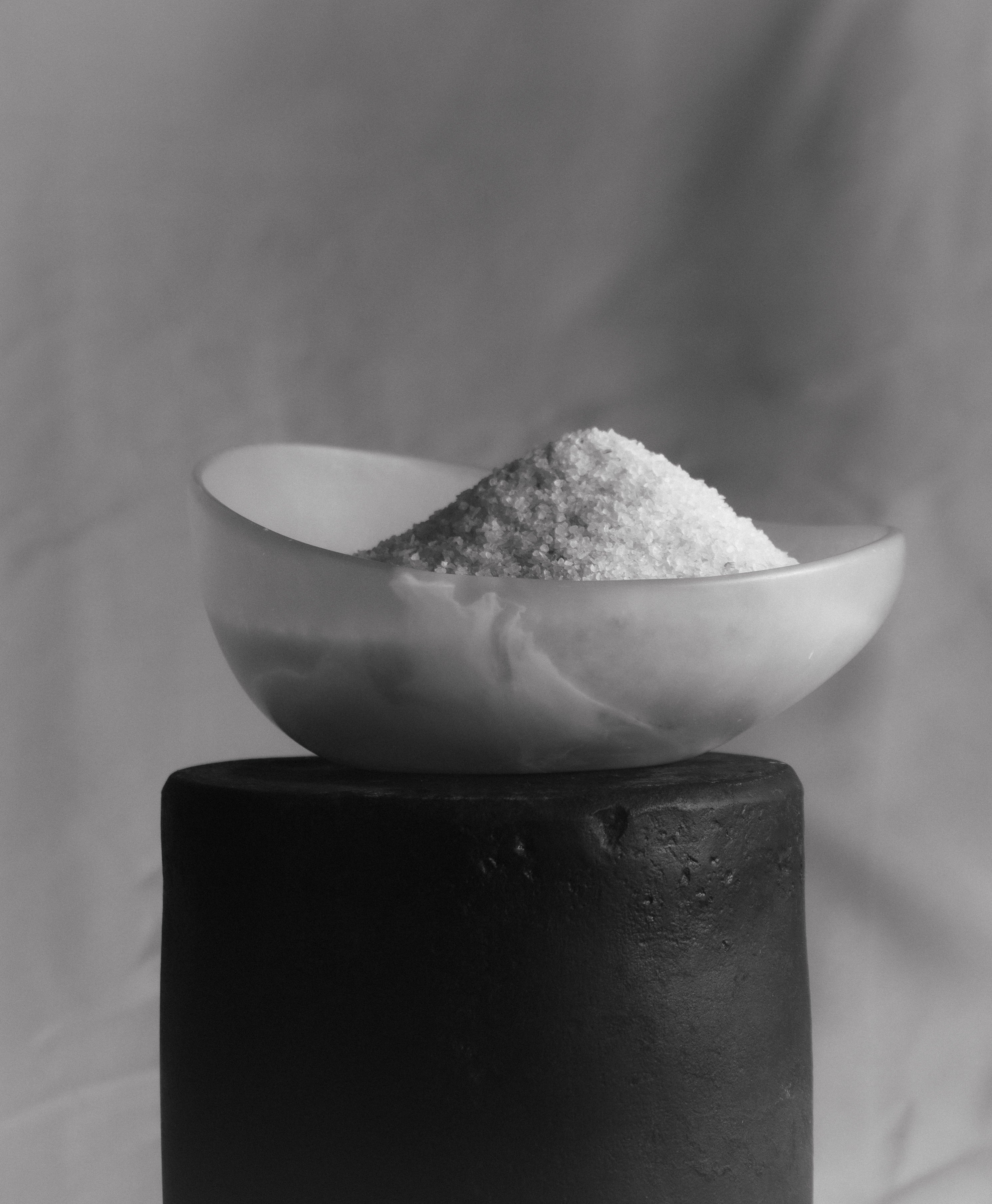
Couscous is more than a grain. It is ritual, generosity and shared meals.
Across Morocco, Algeria, Tunisia and beyond, couscous has long been served at weddings, family gatherings and weekly communal meals. Besides being a national dish of Morocco, it symbolises abundance and hospitality. In 2020 UNESCO recognised the knowledge and practices around couscous as intangible cultural heritage, acknowledging both the dish and the ritual of its preparation.
Traditionally, couscous is made from crushed semolina of durum wheat. The granules are rolled, dried and steamed patiently over simmering stews in a couscousière.
Historical accounts, including those of the 14th-century traveller Ibn Battuta, describe couscous prepared from millet and rice in parts of West Africa. Couscous has always reflected the grain available to its landscape. It is the steaming that defines couscous craft.
The Science and Ritual of Steam
Authentic couscous is steamed rather than boiled. In a couscoussier the couscous sits in the upper chamber while broth or stew simmers below. Steam rises through perforations and hydrates the granules slowly, allowing them to swell without bursting. This gradual hydration keeps the grains light and separates rather than dense or sticky.
After each steaming the couscous is fluffed, lightly moistened and steamed again. That repetition creates airiness and the texture associated with traditional couscous.
Commercial couscous (instant couscous) is commonly pre-steamed and dried so it rehydrates quickly with hot water. Because it has already been cooked once, attempting the full traditional triple steaming will often lead to clumping.
Understanding this difference honours the craft and helps set expectations for texture and technique.
A Gluten-Free Alternative
For those living gluten-free, traditional wheat couscous is not suitable.
Spice Zen’s Rice Couscous preserves the light texture and generosity of couscous while removing gluten.
Our gluten free White Rice Couscous is made from parboiled white rice, chosen for its structural strength and ability to produce separate, fluffy granules once prepared.
Our gluten free Brown Rice Couscous is crafted from parboiled brown basmati rice, offering a deeper, nuttier tone.
Both are certified organic, gluten-free, stone-ground and endorsed by Coeliac Australia.
The rice grains are sorted, gently roasted and stone-milled. They are repeatedly sieved until the desired semolina granule size is achieved. Granule size is critical. Too fine and it becomes pasty. Too coarse and hydration becomes uneven.
When we sieve the granules, they make a soft “ksa ksa” sound as they pass through the mesh. It was during this process that we understood why the word couscous is believed to echo that very sound.
Our rice couscous holds its shape, absorbs flavour beautifully and remains light.
Most alternatives in Australia are imported or industrially processed and made from corn, chickpea or blended flours. We produce ours locally in small batches in our gluten free facility in Sydney, Australia. This allows control over granule size, roasting, milling and final texture, and ensures transparent gluten free handling from milling through packing.
How to Cook Rice Couscous
Rice couscous is designed to absorb rather than to be boiled. It is quick and forgiving when handled gently.
Microwave method
For 1/4 cup couscous, add 1 teaspoon oil or ghee and 1/2 cup boiling water.
Cover and microwave for 1 minute for white rice couscous, 2 minutes for brown.
Let stand covered for 10 minutes. Fluff gently with a fork.
Stovetop method
Bring water or broth to the boil, remove from heat. Stir in couscous, cover and let it absorb for 10 minutes. Fluff lightly.
Traditional couscoussier
Rice couscous, made from rice semolina, does not form a gluten network and therefore does not require the repeated steamings used for wheat. A single gentle steam or brief warming in the couscoussier is sufficient to warm and aerate rice couscous. Once the granules have absorbed boiling water they may be placed in the upper chamber of a couscoussier and gently steamed for 8 to 10 minutes to warm and aerate. A rice cooker with a steam setting can be used in the same way. Seal the joint between the steamer and the pot so steam rises through the granules rather than escaping.
Handle rice couscous lightly. Separation depends on gentle fluffing rather than agitation.
Creative Cooking - Savoury and Sweet Expressions
Rice couscous absorbs flavour beautifully without dominating a dish.
For savoury meals, spoon it beneath slow-cooked vegetables, chickpeas or lamb so it absorbs aromatic broth. Fold through roasted pumpkin, toasted almonds and fresh herbs. Finish savoury couscous with a twist of whole Tellicherry black peppercorns for gentle heat and lift or stir through Spice Zen’s Ras el Hanout, Harissa or Rose Harissa for warmth and depth.
It also works chilled. Combine with cucumber, citrus zest, parsley and olive oil for a bright salad. Add Spice Zen’s Italian herbs or Herb de Provence and roasted vegetables for a Mediterranean character.
For sweet preparations, stir hydrated couscous through almond milk, organic Ceylon cinnamon and orange zest. Add dates, pistachios or a spoon of honey. The light texture carries sweetness gently rather than heavily. Pair it with a pinch of Spice Zen’s Vanilla Rose Sweet Masala.
For a crisp base inspired by Persian Tahdig-style, press cooked couscous into a lightly oiled or buttered pan and allow the underside to turn golden before serving for a textural contrast.
Its simplicity allows it to adapt. It is a blank canvas that carries flavour gently and reliably.
Why It Matters
Couscous has always reflected its land and its people.
Our rice couscous reflects a modern table, one where gluten intolerance and coeliac disease are realities, and inclusion matters.
By crafting rice couscous from stone-ground rice semolina in Australia, we preserve the lightness and generosity of the original while ensuring it remains accessible.It allows everyone at the table to share the same dish.
Explore Spice Zen’s stone-ground, gluten-free rice couscous, and gluten free semolina to bring timeless dishes into your kitchen, your way.
FAQs
Is traditional couscous gluten-free?
No. Traditional couscous is made from durum wheat semolina and contains gluten.
Is Spice Zen’s rice couscous suitable for coeliacs?
Yes. It is certified gluten-free and endorsed by Coeliac Australia.
Does rice couscous taste different from wheat couscous?
Rice couscous has a lighter, cleaner flavour while maintaining a fluffy, separate texture.
Can rice couscous replace wheat couscous in recipes?
Yes. It can be substituted in most couscous recipes while remaining gluten-free. Adjust liquid and handling to avoid overcooking.
How should rice couscous be stored?
Store in an airtight container away from heat and moisture to preserve freshness.
Do you offer gluten free brown rice couscous?
Yes. Our gluten free brown rice couscous is made from brown basmati rice and crafted to stay light and fluffy when prepared.
Do you sell gluten free semolina?
Yes. We offer gluten free semolina for cooking and baking.
Where can I buy organic Ceylon true cinnamon online in Australia?
You can buy organic ceylon true cinnamon online in australia via our website. It pairs beautifully with sweet couscous bowls and warm breakfast-style servings.
Do you stock whole Tellicherry black peppercorns?
Yes. We stock whole Tellicherry black peppercorns, ideal for finishing savoury couscous dishes with gentle warmth and lift.


